A customer’s last shop doesn’t guarantee their next one. A recent Ernst & Young survey found that 88% of Australians shop across more than one grocery retailer each month (September 2026). For grocers, that means every next basket is up for grabs.
That thinking drives Tucker Fresh IGA, a 13-store independent grocer in Western Australia. When it launched FreshConnect Rewards with Slyp in October 2025, base rewards were set up as the foundation, and the customer understanding they unlock became the way to earn the next shop and grow the basket.
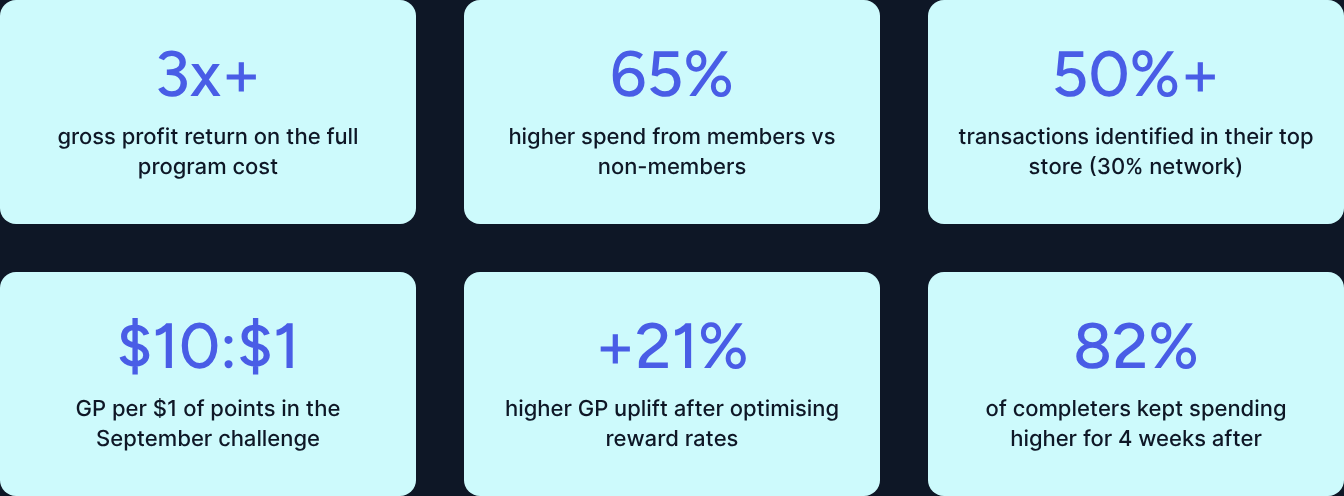
Twelve months on, the program is generating more than $3 in gross profit for every dollar spent running and funding it.
What Tucker Fresh did
Made identifying at the till a habit. Base points give shoppers a reason to scan their membership on every visit, and each identified transaction links a shopper to their full basket, down to the individual product. Tucker Fresh now identifies more than 50% of transactions in its top-performing store and 30% across its network.
Used basket data to see different customers differently. A regular who drops in for a few items is a different opportunity from a shopper who fills a big trolley once a fortnight. A blanket discount treats them the same and serves neither particularly well.
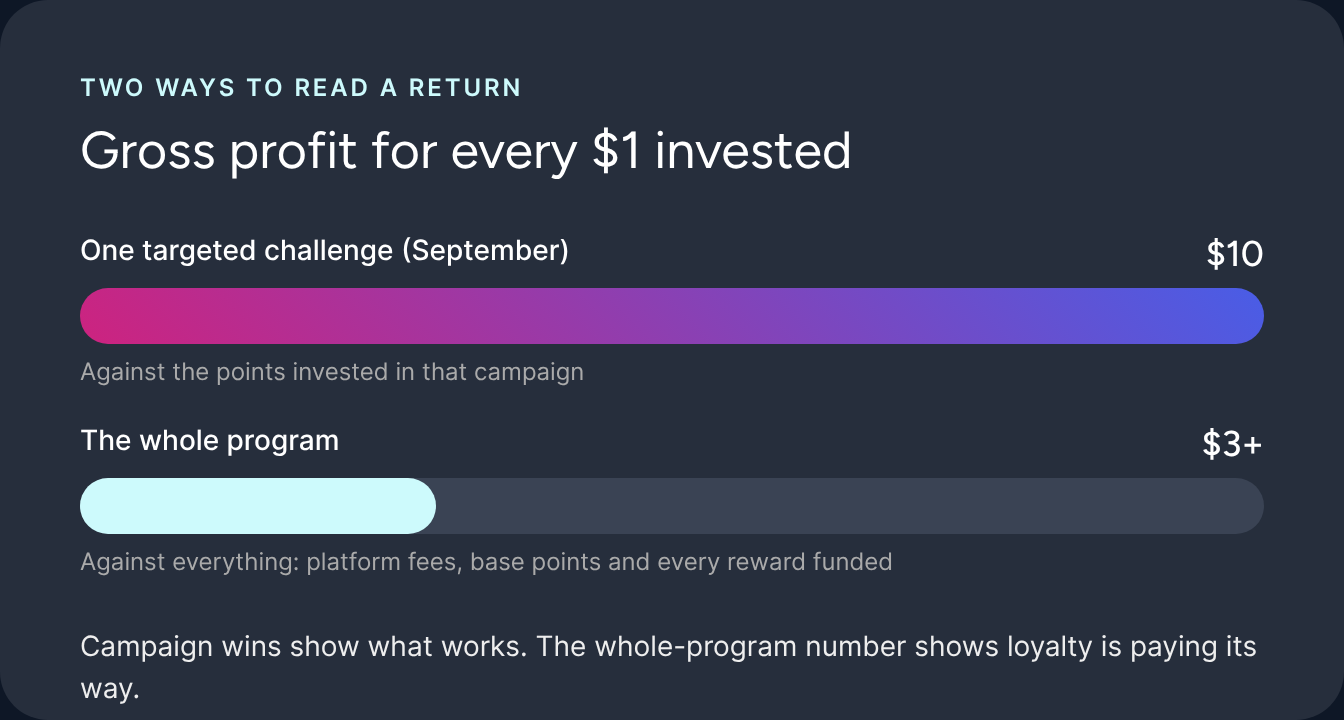
Gave every incentive a specific job. Rather than adding points across the board, Tucker Fresh directs extra value at the behaviour it wants more of, using personalised challenges in the Go Rewards app that reward a bigger basket or an extra visit. Its September 2026 stretch challenge, which rewards members for growing their weekly spend, delivered $10 in gross profit for every $1 of points invested. Base points pay for the habit; targeted offers are only paid for when behaviour changes.
Kept refining with Slyp's growth team. Monthly performance reviews with Slyp's strategic growth team decide what runs next, so store teams can stay focused on running stores. In one review, the team recommended adjusting the stretch challenge's reward rate for each spend segment, optimising for incremental gross profit.
That change delivered a 21% higher gross profit uplift than the previous month's offer, and 82% of members who completed the challenge kept spending above their historical average for the four weeks after it ended.
Measuring the true impact of the program
A comparison of member and non-member spend alone can't show the full picture on its own, so Tucker Fresh looks at three measures together:
- Members vs non-members: members spend 65% more than non-members.
- The same members over time: consistent cohorts show whether people are shopping more often and spending more.
- Campaigns vs control groups: key campaigns run against a control group to isolate the genuine uplift.
Together, they show the program delivering more than 3x gross profit return, measured against the fully loaded cost of running and funding it. That figure sits below a single campaign's return because it carries everything: platform fees, base points and every reward funded.
"Our customers have plenty of choice, so we never take their shop for granted. What we've seen is that loyalty gives us more of an opportunity to earn their next shop by better understanding their behaviours and preferences. We can see whether they pop in for milk and bread, or do the big weekly shop, and give each member a reason to come back and do a bit more with us. That's what really makes an impact: investing intelligently in rewards rather than just blanket discounting."
Eryn Leonard, Head of Marketing, Tucker Fresh IGA
What other retailers can take from it
Treat points as the price of entry, not the strategy. Base rewards get shoppers to identify on every visit, and that identification is the asset. The return comes from what you do with the data.
Give each incentive a job before you fund it. Aim every challenge and offer at a specific behaviour: another visit, a bigger basket, or a category a shopper currently buys elsewhere. If you can't name the behaviour, it's a discount, not an investment.
Measure the whole program, not just the campaigns. Campaign results show which offers work. A whole-program view shows whether loyalty is paying its way.
Compete on precision, not discount depth. National chains will always have bigger loyalty budgets. Independent retailers close the gap by getting more out of every dollar they already spend on loyalty.
Earning the next basket
For independent grocers, competing with the major chains doesn't mean matching every discount. It means making deliberate choices about where rewards create value, and measuring whether they do.
Talk to Slyp about what your loyalty program is really returning.